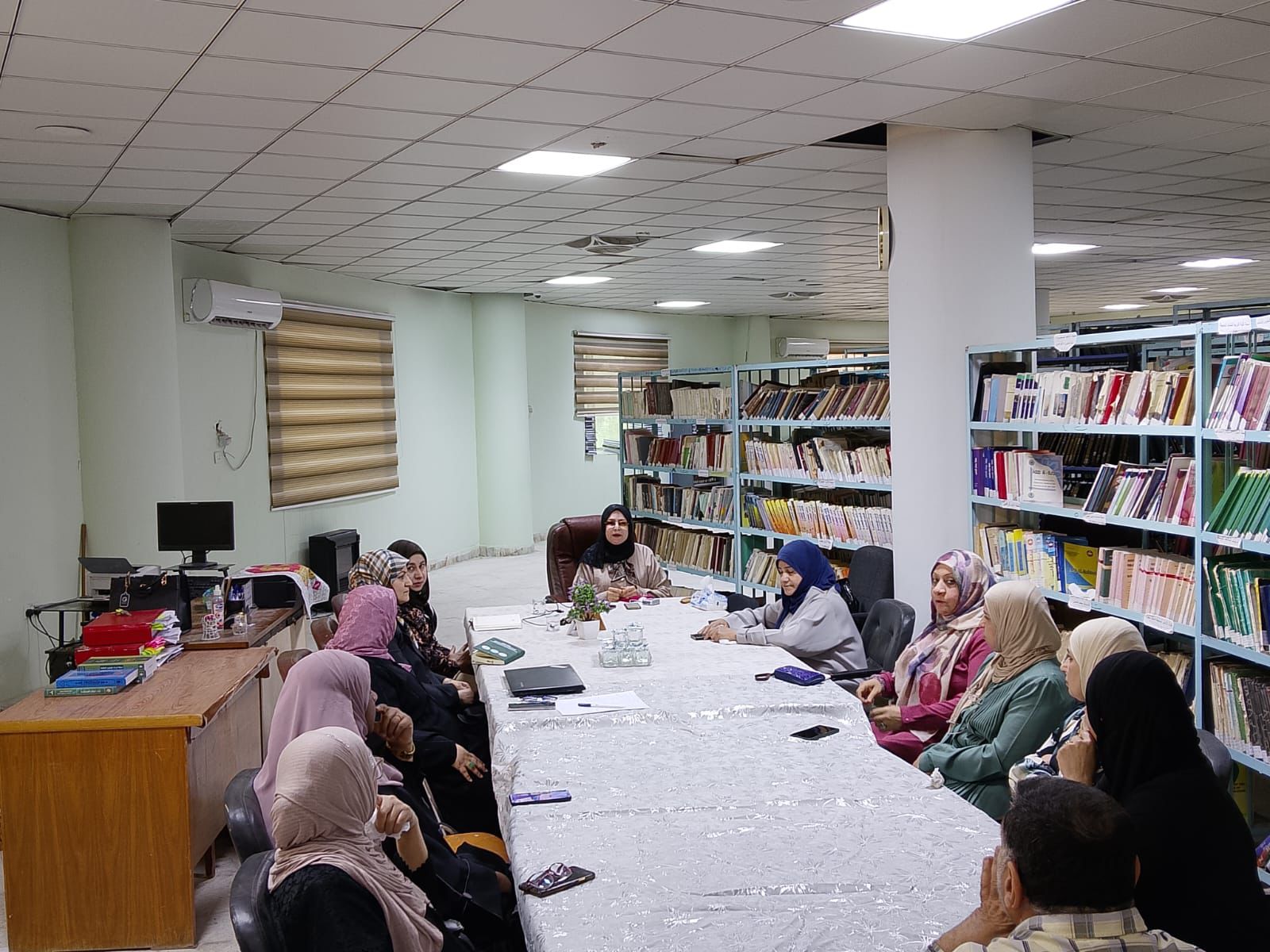
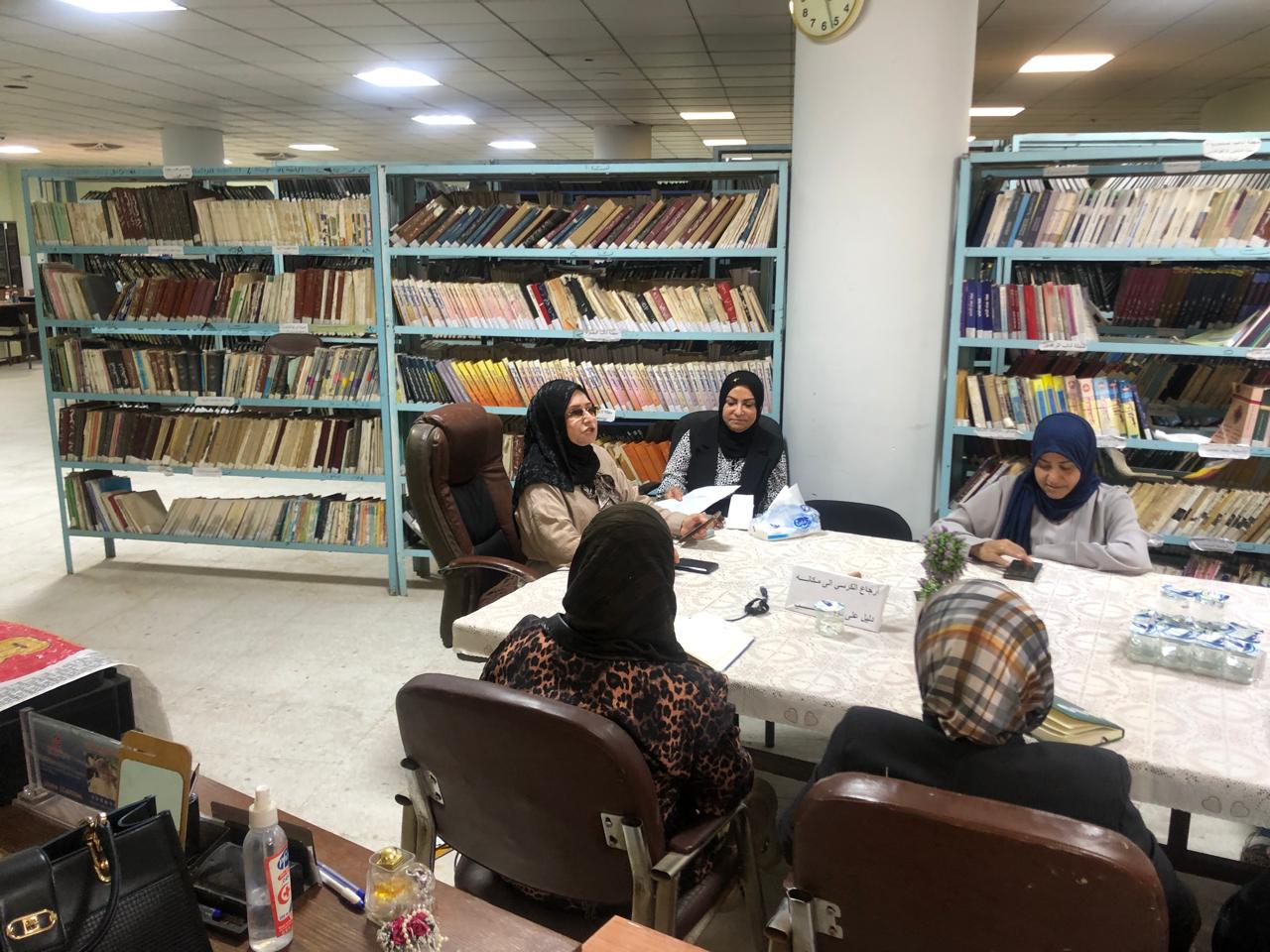
Under the patronage of the President of the University of Basrah, Professor Dr. Muhannad Jawad Al-Asadi, and under the supervision of the Dean of the College of Arts, Professor Dr. Majid Abdulhamid Al-Kaabi, with the follow-up of the Assistant Dean for Scientific Affairs, Professor Dr. Haider Abdul-Ridha Al-Tamimi, and the Assistant Dean for Administrative Affairs, Professor Dr. Mohammed Abdul-Kadhim, and under the supervision of the Director of the Library of the College of Arts, Professor Dr. Hala Ghalib Al-Nahi, the Library of the College of Arts held a scientific workshop titled:
(Silent Drain in Work and Life: How Do We Protect Ourselves?).
The workshop, which was managed by Dr. Hala Ghalib Al-Nahi and presented by Professor Dr. Batoul Ghalib Al-Nahi, a specialist in psychological counseling at the University of Basrah, aimed to introduce employees to the concept of silent drain, highlight its daily manifestations, and link it to the reality of work and life, in addition to providing practical strategies for prevention.
The workshop included defining silent drain as a gradual consumption of psychological and mental energy without clear notice, which makes it dangerous for the individual, as it does not appear suddenly nor is it linked to a major event, but rather accumulates as a result of small daily details. It also distinguished it from ordinary fatigue.
The workshop also addressed the most prominent sources of drain in the work environment, family, and social relationships, in addition to discussing its psychological manifestations, including: constant exhaustion, loss of motivation, distraction, and overthinking. In the work environment, its manifestations include difficulty completing tasks, increased sensitivity toward colleagues, feeling unappreciated, and boredom from routine.
The workshop pointed to digital drain as one of the most important sources of exhaustion, resulting from excessive use of phones, frequent notifications, and continuous information flow.
At the conclusion of the workshop, a self-treatment program was presented, which included a set of strategies such as energy management, setting psychological boundaries and learning to say “no,” mindful rest through mindfulness exercises and digital isolation, in addition to strategies for recharging psychological and mental energy.
The workshop emphasized the importance of preparing a personal therapeutic charter, which includes identifying sources of drain, organizing tasks according to peak activity times, along with conducting a weekly review to assess commitment to implementation and address obstacles. The workshop also included practical exercises, interventions, and discussions by the participants.
Important News