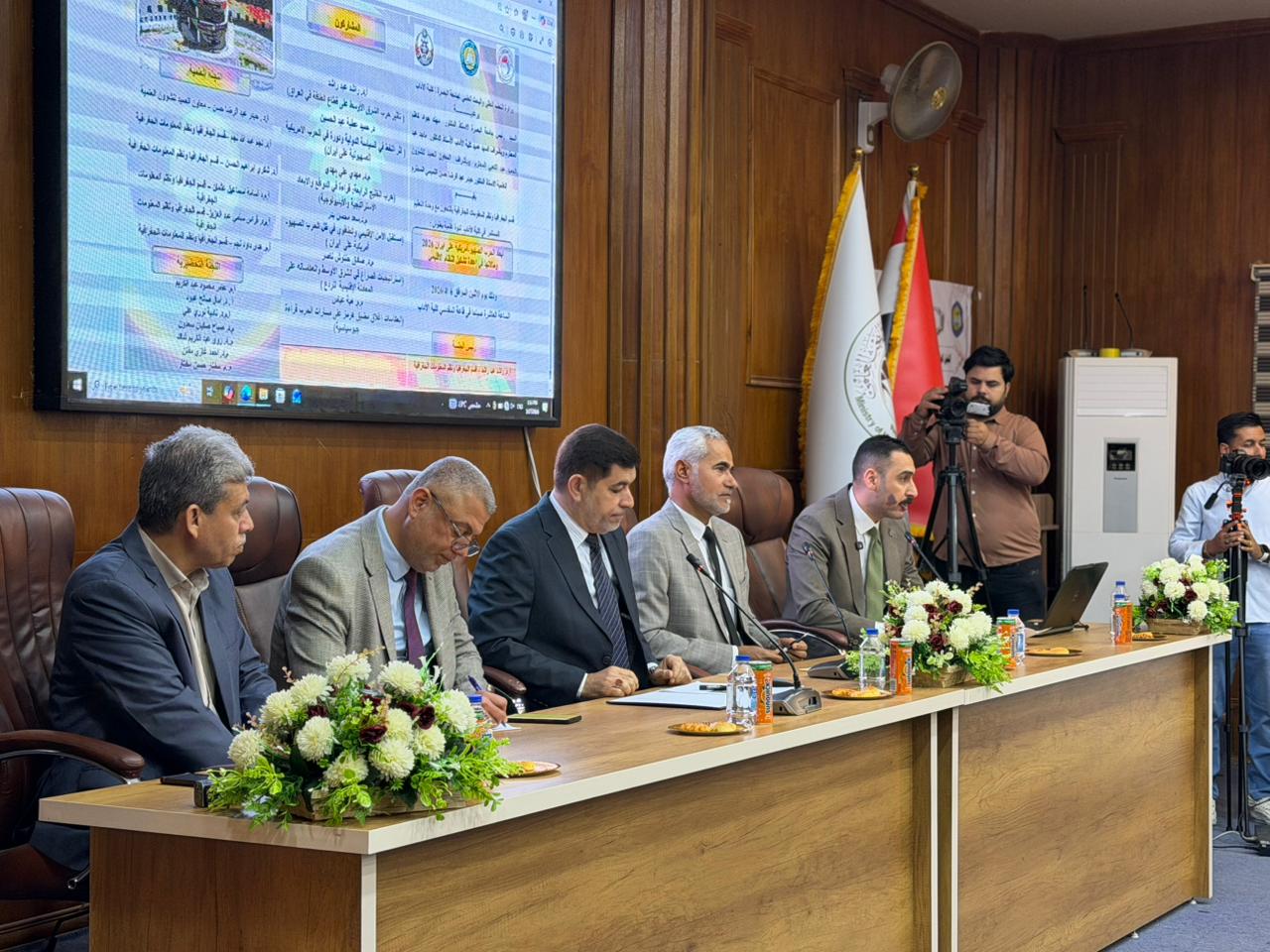
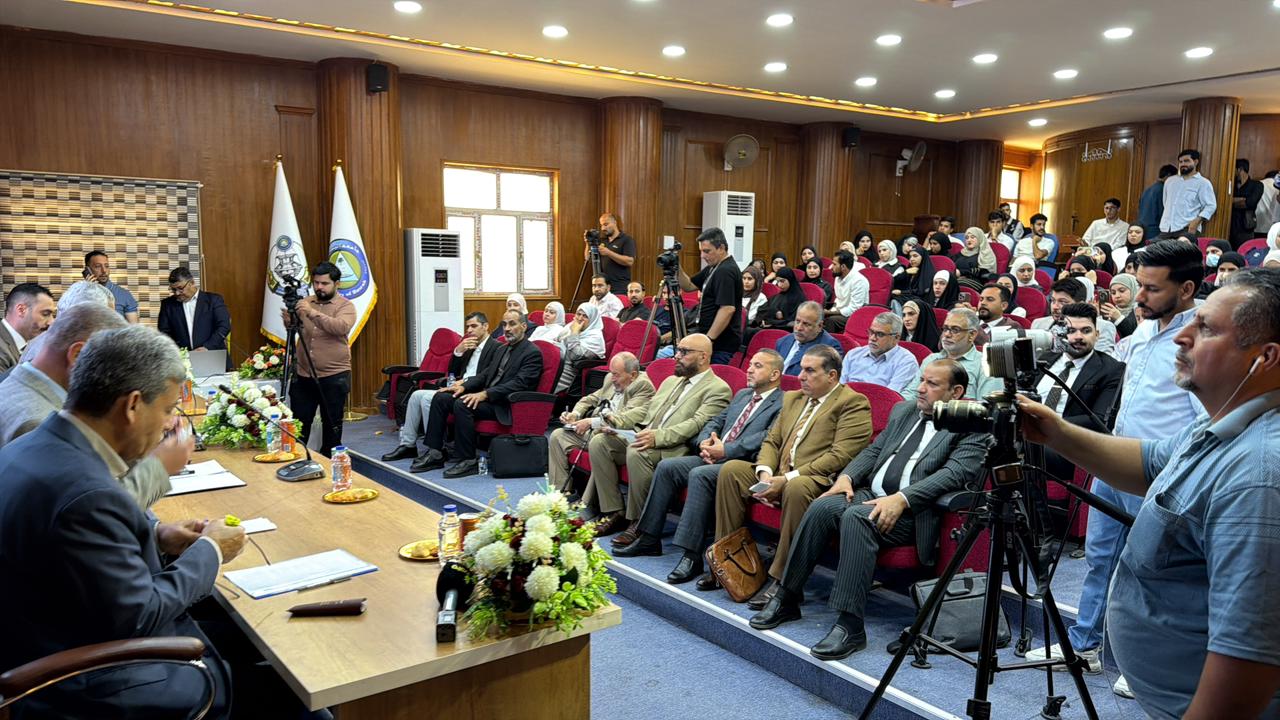
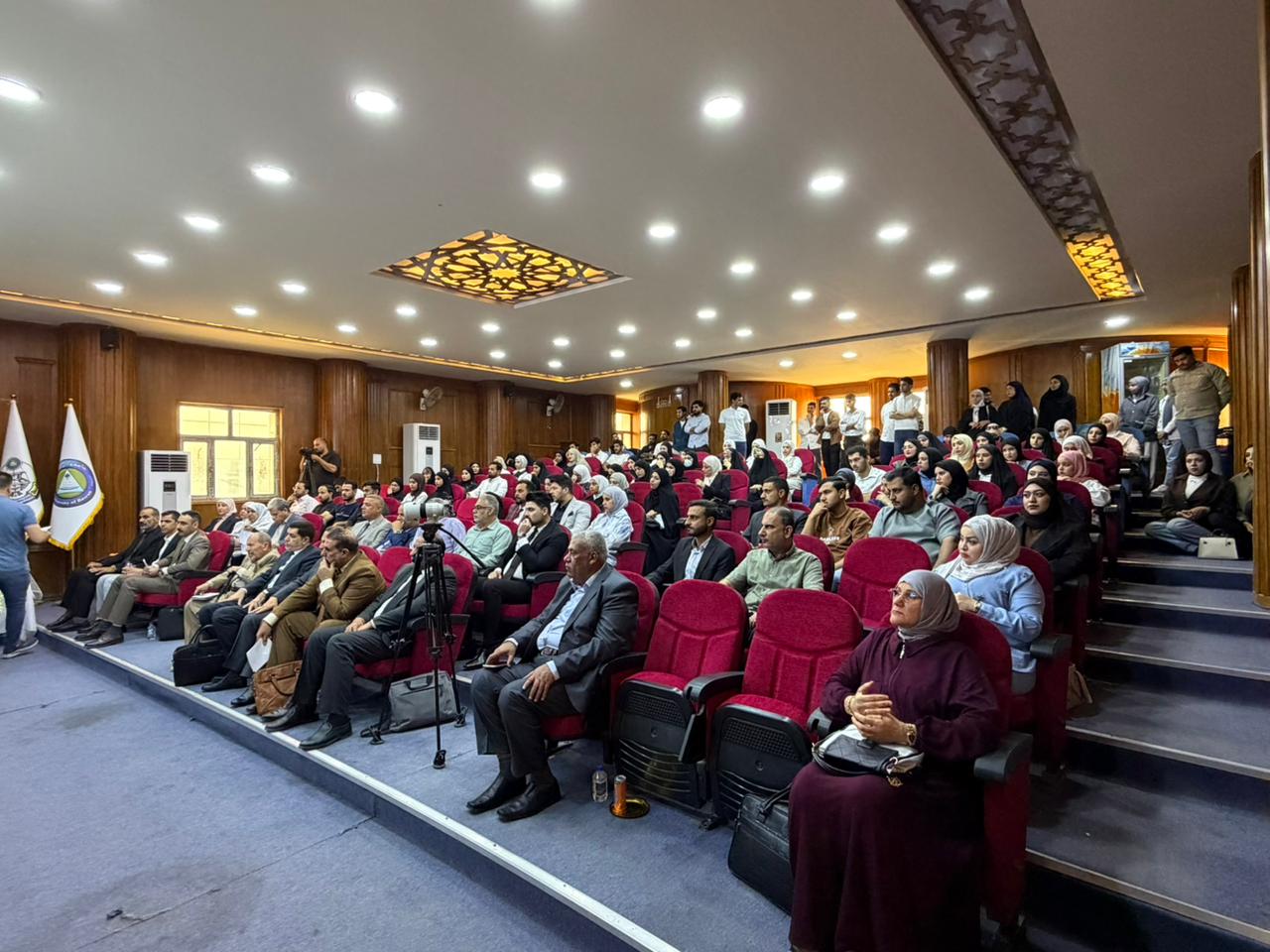
In light of the challenges and tensions facing the region, the Department of Geography and Geographic Information Systems in the College of Arts at the University of Basrah held a scientific seminar on Monday, 6/4/2026, titled: “Dimensions of the Zionist-American War on Iran 2026 and Its Role in Reshaping the Regional Order.”
The seminar addressed potential war scenarios led by Zionist-American forces against Iran, focusing on analyzing the underlying motives of the conflict and its geopolitical trajectories, particularly with regard to the closure of the Strait of Hormuz and the resulting shifts in deterrence systems and energy security, ultimately leading to a redrawing of the regional order.
The seminar included several themes, where the first theme reviewed the strategic and ideological motivations of the war, pointing to attempts to end Iran’s nuclear program, dismantle the Axis of Resistance, ensure the security of Israel and the Gulf states, in addition to pursuing regional dominance and proposing political and economic projects within what is known as the “New Middle East.”
The second theme focused on the geopolitical importance of the Strait of Hormuz, which controls a large proportion of global oil trade, indicating that its closure could shift the conflict from a regional to a global level, accompanied by a significant rise in prices, disruption of supply chains, and economic recession in many countries.
The third theme addressed the future of regional and energy security, indicating the potential destruction of oil infrastructure and its impact on global energy flows, in addition to the economic pressures that major countries may face as a result of rising oil and gas prices.
The fourth theme shed light on conflict strategies and their implications for the deterrence equation, highlighting Iran’s ability to adapt rapidly and impose a deterrence balance based on the principle of reciprocal response.
In the fifth theme, the impact of war on Iraq’s energy sector was discussed, where it was pointed out that Iraq heavily depends on the Strait of Hormuz for exporting oil, as well as being affected by gas and electricity supplies coming from Iran, and the implications of this on electricity production.
Meanwhile, the sixth theme addressed the role of oil in international politics, emphasizing its use as a tool of pressure in the conflict through controlling the passage of oil tankers via the Strait of Hormuz.
The seminar concluded with a number of findings, most notably that such a war may contribute to a transition from a unipolar to a multipolar international system, along with the redrawing of spheres of influence in the region. It also emphasized the necessity for Iraq to review its security and economic policies, diversify its sources of income, avoid total reliance on oil, in addition to seeking alternative routes for energy export and strengthening its defense capabilities in a way that preserves its sovereignty amid rapidly changing regional dynamics.
Important News
.jpeg)
.jpeg)