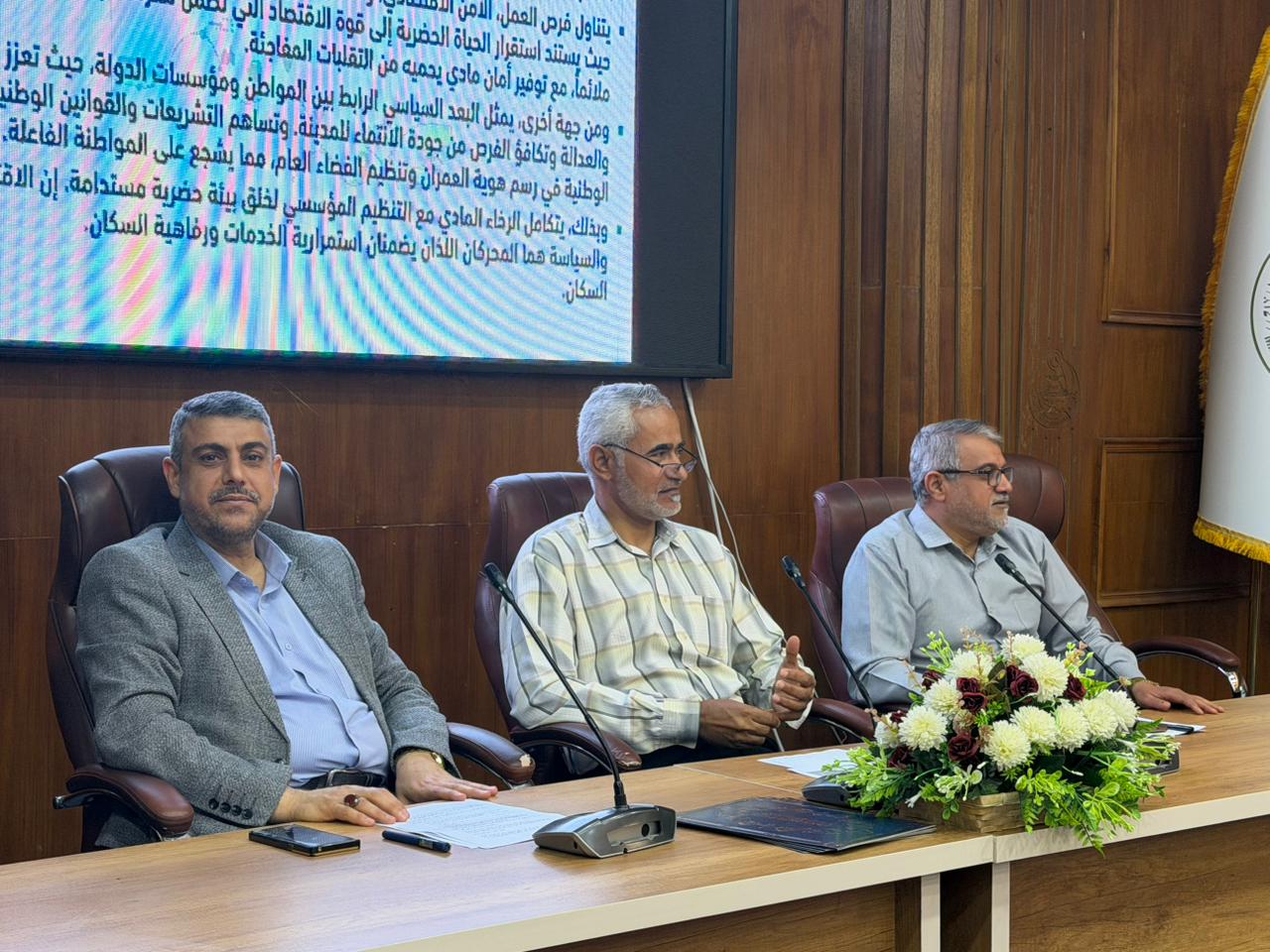
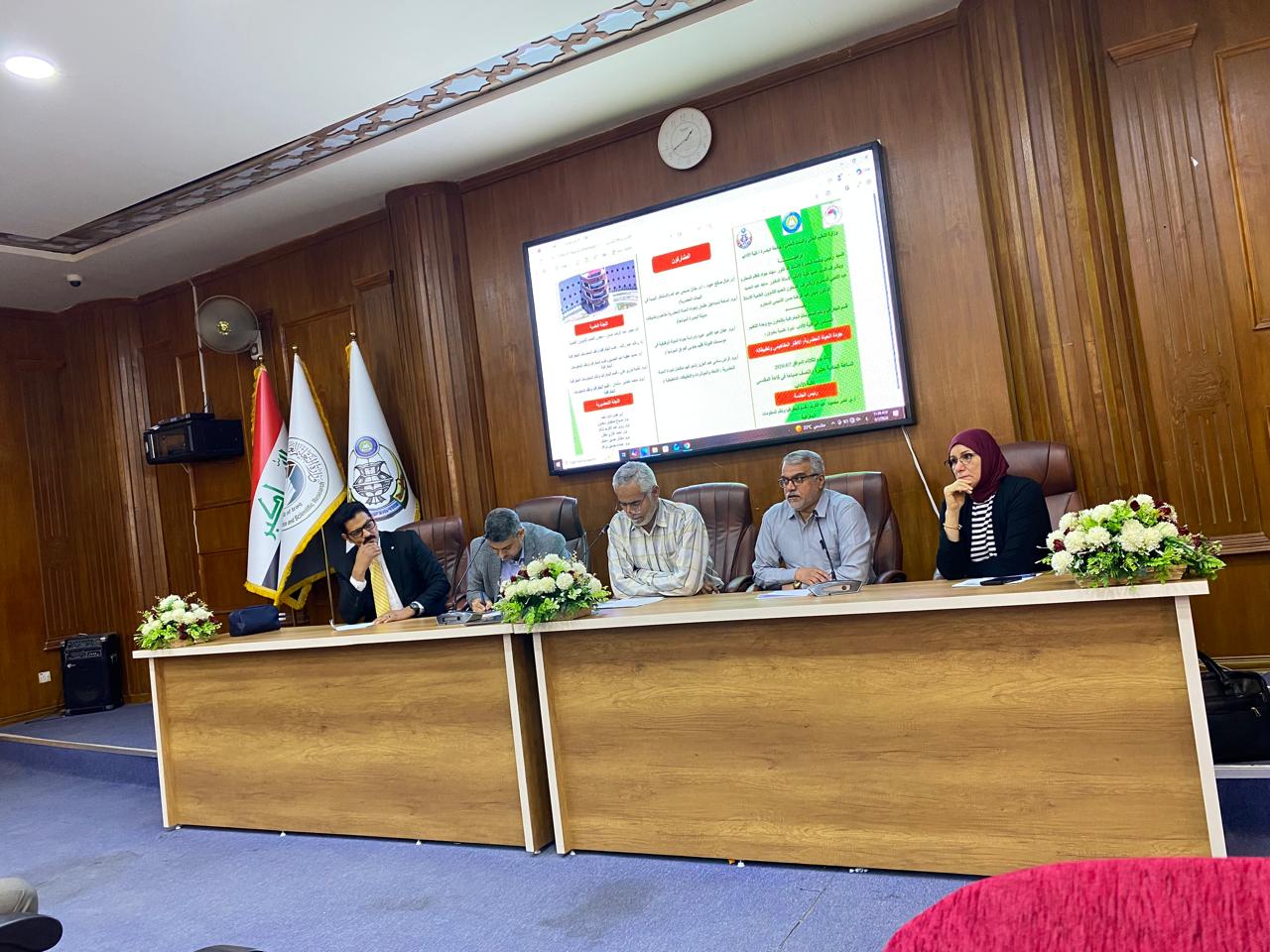
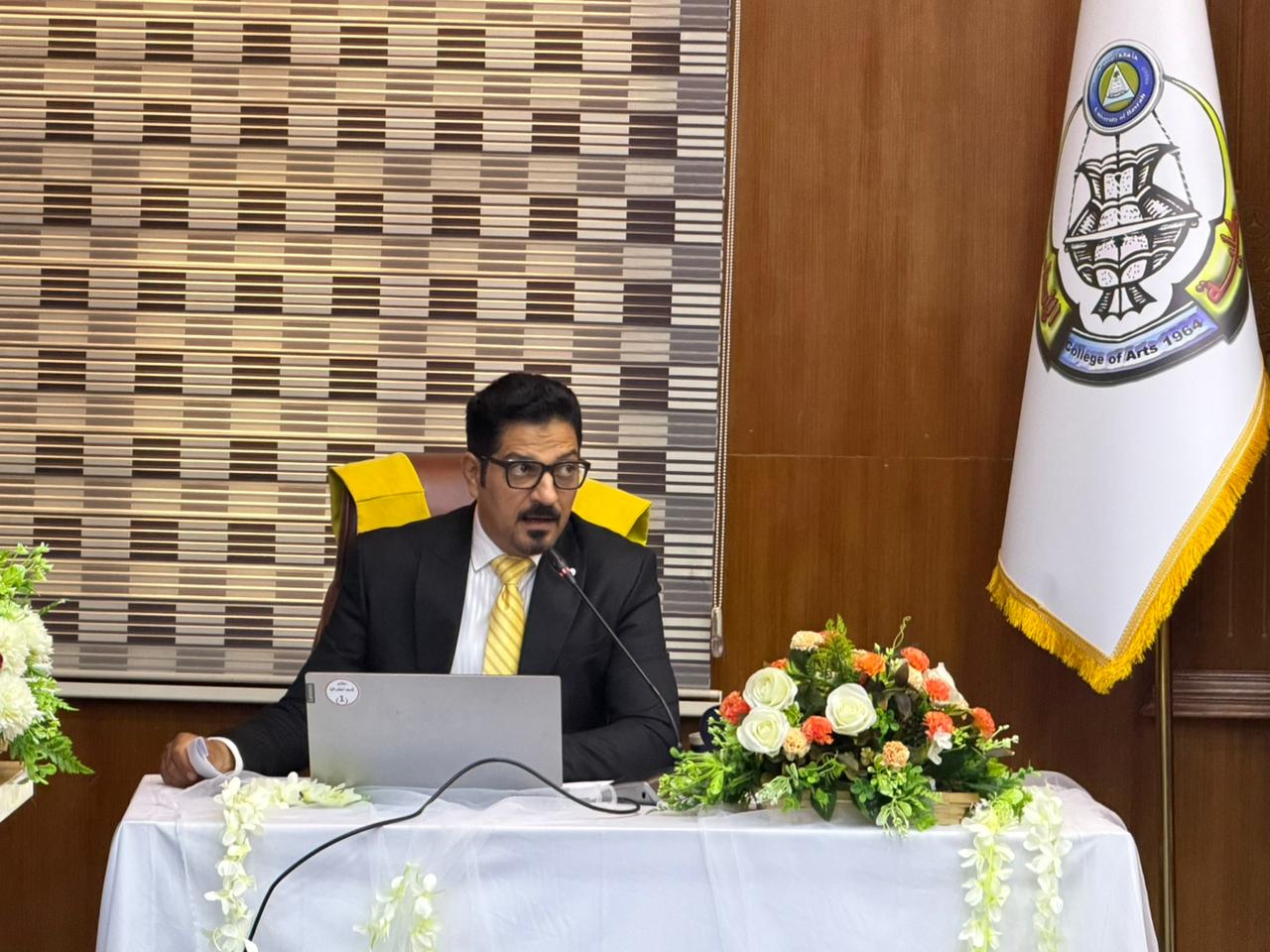
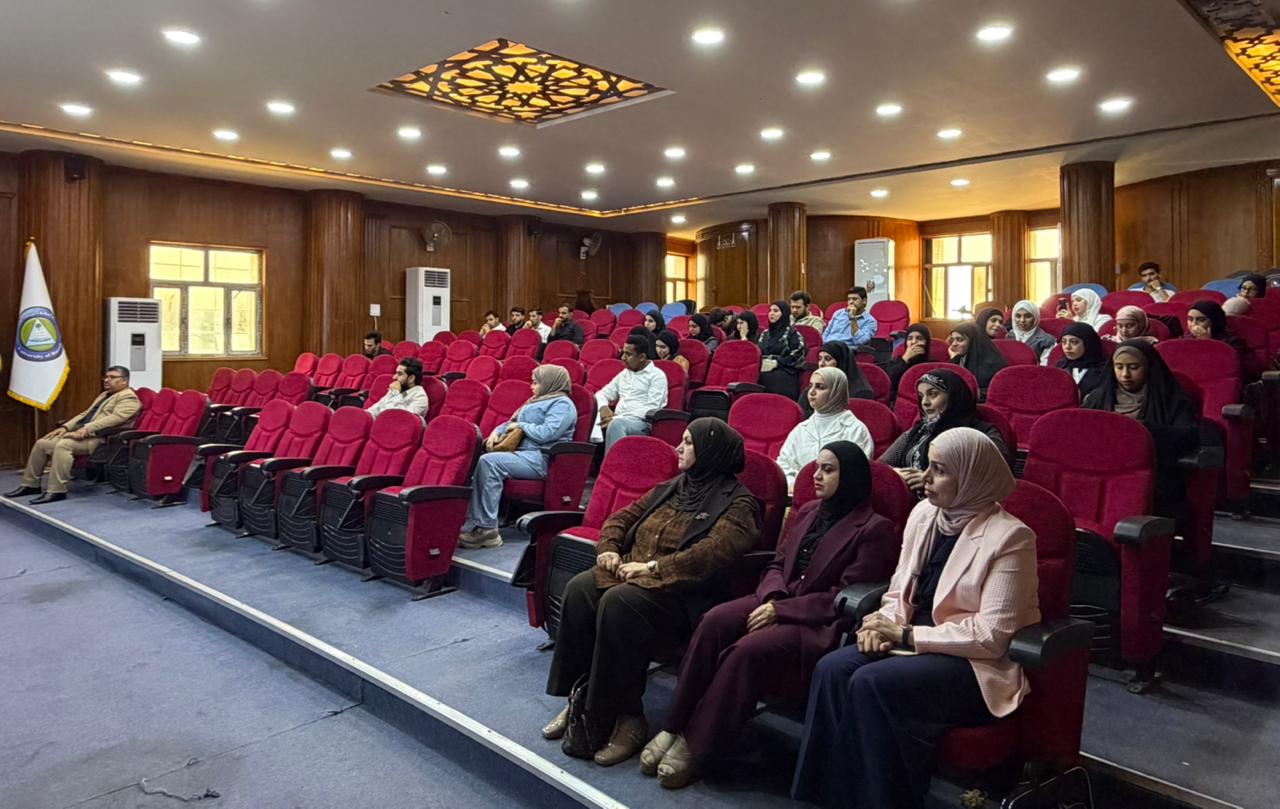
The Department of Geography and Geographic Information Systems in the College of Arts at the University of Basrah organized a scientific seminar titled (Quality of Urban Life and Its Applications in the City of Basrah)
The seminar, which was chaired by Professor Dr. Rashid Abd Rashid, addressed the quality of urban life as one of the central concepts in contemporary planning and social studies, as it is no longer limited to providing basic services, but has extended to include psychological well-being, social justice, and environmental sustainability.
The seminar included four scientific themes, where the first theme presented a research paper titled (Environmental Risks in Urban Environments), prepared by Professor Dr. Amal Saleh Obeid and Professor Dr. Hanan Subhi Abdullah, which highlighted the most prominent environmental challenges in cities, including air and water pollution, solid waste management problems, and the phenomenon of urban heat islands resulting from urban expansion and lack of green spaces.
The second theme consisted of a research paper by Assistant Professor Dr. Osama Ismail Othman titled (Urban Quality of Life: Concepts and Applications – Basrah as a Model), which discussed the concept of quality of life as a fundamental pillar in modern urban planning, along with analyzing the reality of Basrah city and diagnosing the gap between global planning standards and the current urban reality through studying its environmental, social, economic, and urban dimensions.
The third theme was presented by Assistant Professor Dr. Adel Abdul Amir Obeid in a paper titled (A Study of Quality of Work Life in State Institutions, Southern Iraq Region as a Model), in which he addressed the relationship between the work environment and institutional performance efficiency, emphasizing that the government institution represents a miniature urban environment that directly affects employee productivity and job satisfaction.
The fourth theme included a research paper titled (Towards an Integrated Understanding of Urban Quality of Life: Dimensions, Indicators, and Urban Applications), presented by Assistant Professor Dr. Firas Sami Abdulaziz, focusing on the idea that quality of life represents an integrated state of well-being that requires combining objective and subjective indicators to achieve a balanced and sustainable urban environment.
The seminar concluded with a number of recommendations, most notably:
• Addressing environmental risks through expanding green spaces and enhancing pollution control.
• Adopting the concept of “humanizing cities” by redesigning public spaces to achieve social interaction.
• Developing a sustainable transport system that supports public transportation and active mobility such as walking and cycling.
• Adopting housing policies that ensure the provision of adequate and affordable housing.
• Enhancing the work environment within government institutions to achieve quality of work life.
Important News