.jpeg)
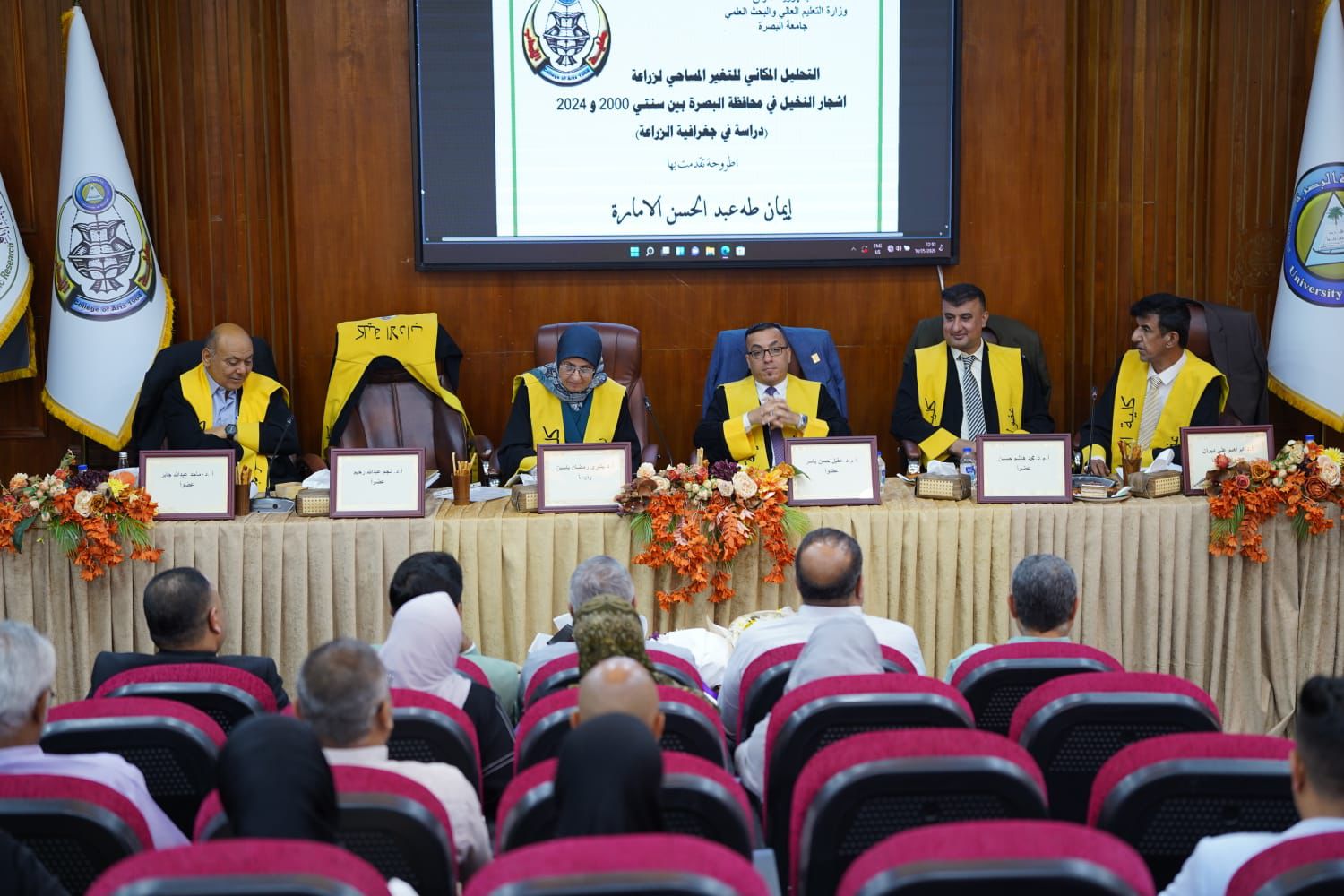
A doctoral dissertation in the Department of Geography and Geographic Information Systems at the College of Arts, University of Basrah, examined:
“The Spatial Analysis of Area Changes in Palm Tree Cultivation in Basrah Governorate between 2000 and 2024 – A Study in Agricultural Geography,” presented by researcher Iman Taha Abdulhassan.
The dissertation aimed to analyze the natural and human factors affecting palm cultivation, such as geographical location, climate, soil, and water resources, in addition to human factors including labor, irrigation systems, and agricultural policies. It also studied temporal and spatial changes in cultivated areas in order to support decision-making for reviving this vital sector according to sustainable development principles.
The study results showed that the number of palm trees in Basrah Governorate exceeded 3 million trees in 2000 within areas approaching 80,000 dunams, with annual production reaching approximately 500–600 thousand tons. However, by 2024, the number had declined to around 2.5 million trees, despite the expansion of cultivated areas to more than 168,000 dunams.
The study indicated that this decline was due to several factors, including increased salinity, water scarcity, and agricultural land degradation, alongside a shift toward modern low-density agriculture and the reclamation of new lands, especially in western areas of the governorate such as Al-Zubair District.
The findings also pointed to a decline in annual production to approximately 350–400 thousand tons due to reduced tree density and productivity per tree, in addition to the deterioration of traditional varieties such as Barhi, Halawi, and Zahdi, alongside the emergence of modern commercial varieties.
The dissertation concluded that the expansion of cultivated palm areas did not positively reflect on production, which calls for adopting sustainable agricultural and water policies that contribute to protecting this important agricultural resource and preserving local varieties.
Important News