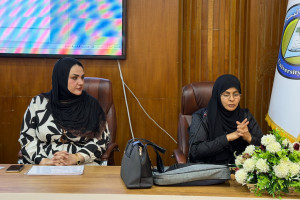
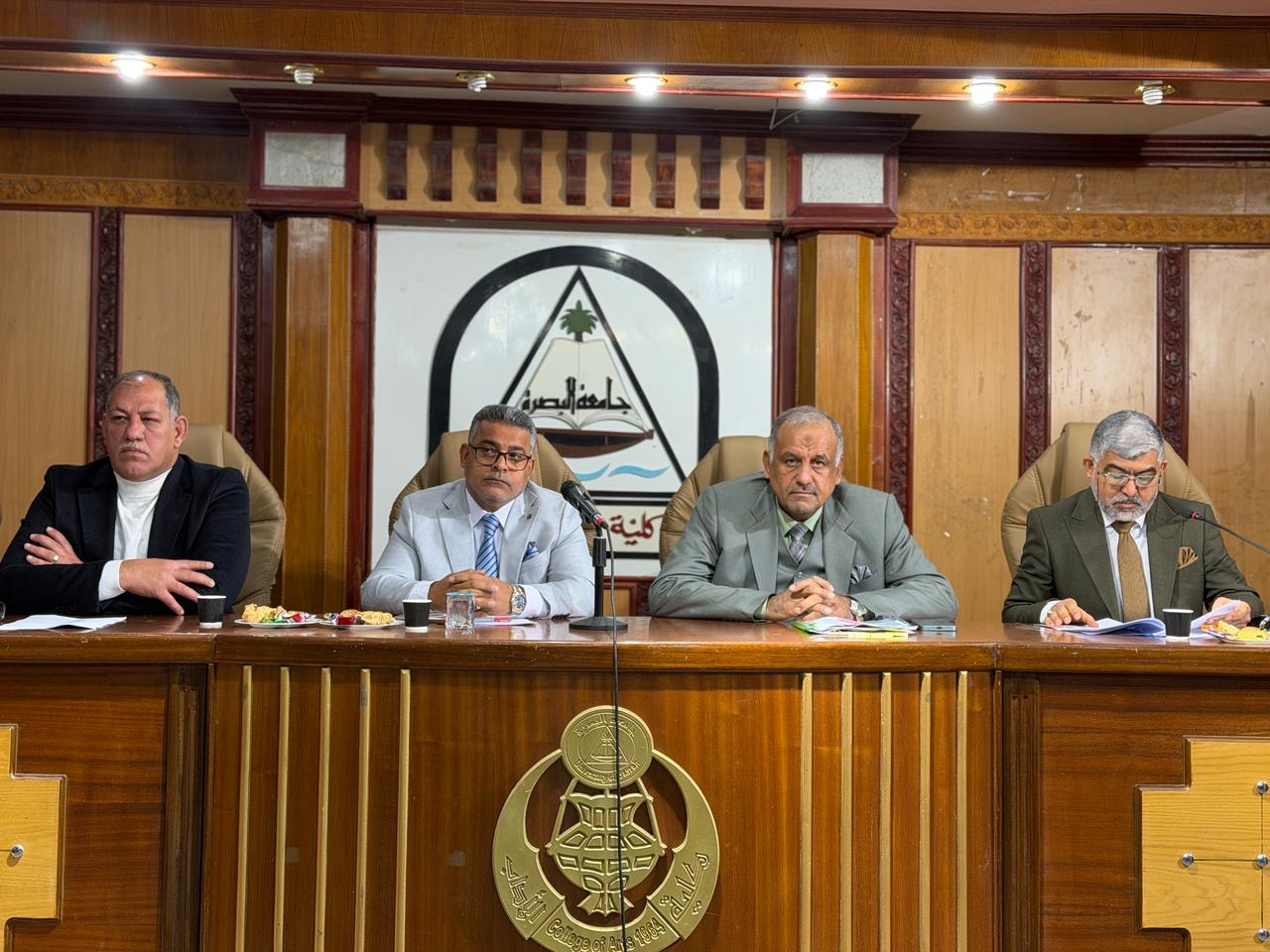
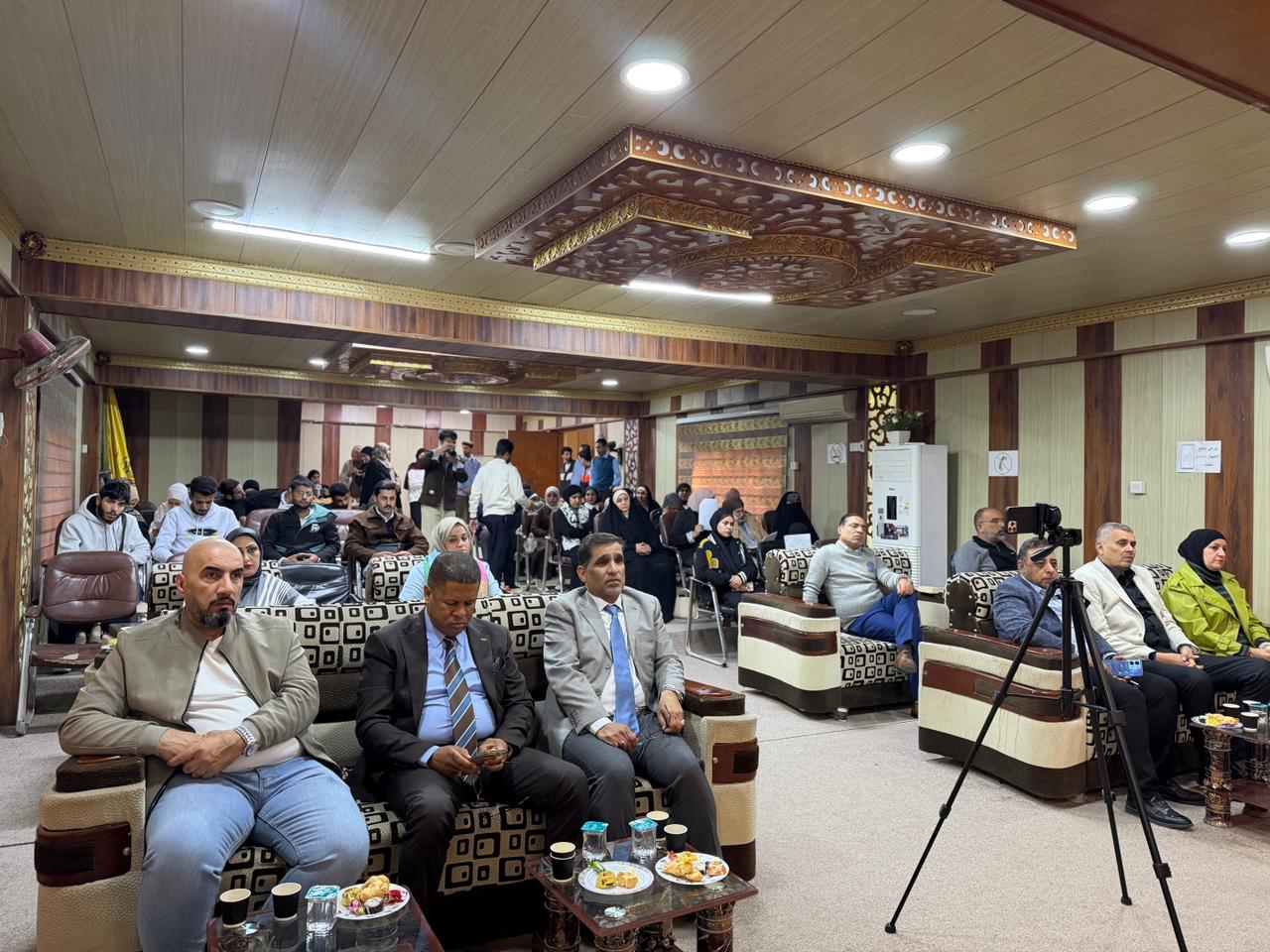
On Wednesday morning, January 7, 2026, the Department of History at the College of Arts, University of Basra, held a cultural seminar entitled “The Approach of Imam Ali: Thought that Inspires and Values that Live On,” in Al-Farazdaq Hall. The seminar addressed administrative and philosophical visions, in addition to highlighting the biography of the Commander of the Faithful, Imam Ali bin Abi Talib (peace be upon him).
The seminar was attended by a select group of history professors, namely:
1. Professor Dr. Shaker Majeed Kadhim – College of Arts / Department of History
2. Professor Dr. Jawad Kadhim Al-Nasrallah – College of Arts / Department of History
3. Professor Dr. Ammar Fadhil Hamza – College of Education for Women / Department of History
The seminar was moderated by Professor Dr. Haider Lazem Aziz – College of Arts / Department of History.
Professor Dr. Shaker Majeed Kazem presented his research paper entitled (In Management: How Society is Managed - A Reading of the Era of Malik al-Ashtar), in which he focused on the role of Imam Ali (peace be upon him) in building a righteous society based on the principles of justice, equality, mercy and peaceful coexistence, while fighting ignorance, discrimination and injustice, and emphasizing the importance of good work, self-purification and serving people as a way to achieve individual and collective happiness.
Professor Dr. Jawad Kadhim Al-Nasrallah discussed Imam Ali’s (peace be upon him) vision of managing society through combining opposites, which means embodying seemingly contradictory perfections in one personality, such as combining extreme courage and absolute generosity, or mercy and firmness, or asceticism in this world and adherence to the truth.
As for the participation of Professor Dr. Ammar Fadel Hamza, it highlighted the universality of the thought of Imam Ali (peace be upon him) as a universal human thought that transcends the limits of time and place, through his research paper entitled (On Universality: How the Other Saw Him - Imam Ali in the Thought of George Jordac).
The seminar was attended by the Dean of the College of Arts, Professor Dr. Majid Abdul Hamid Al-Kaabi, along with a group of faculty members and students, amidst a scientific and intellectual interaction that reflected the importance of the topic presented and its cognitive value

.jpeg)