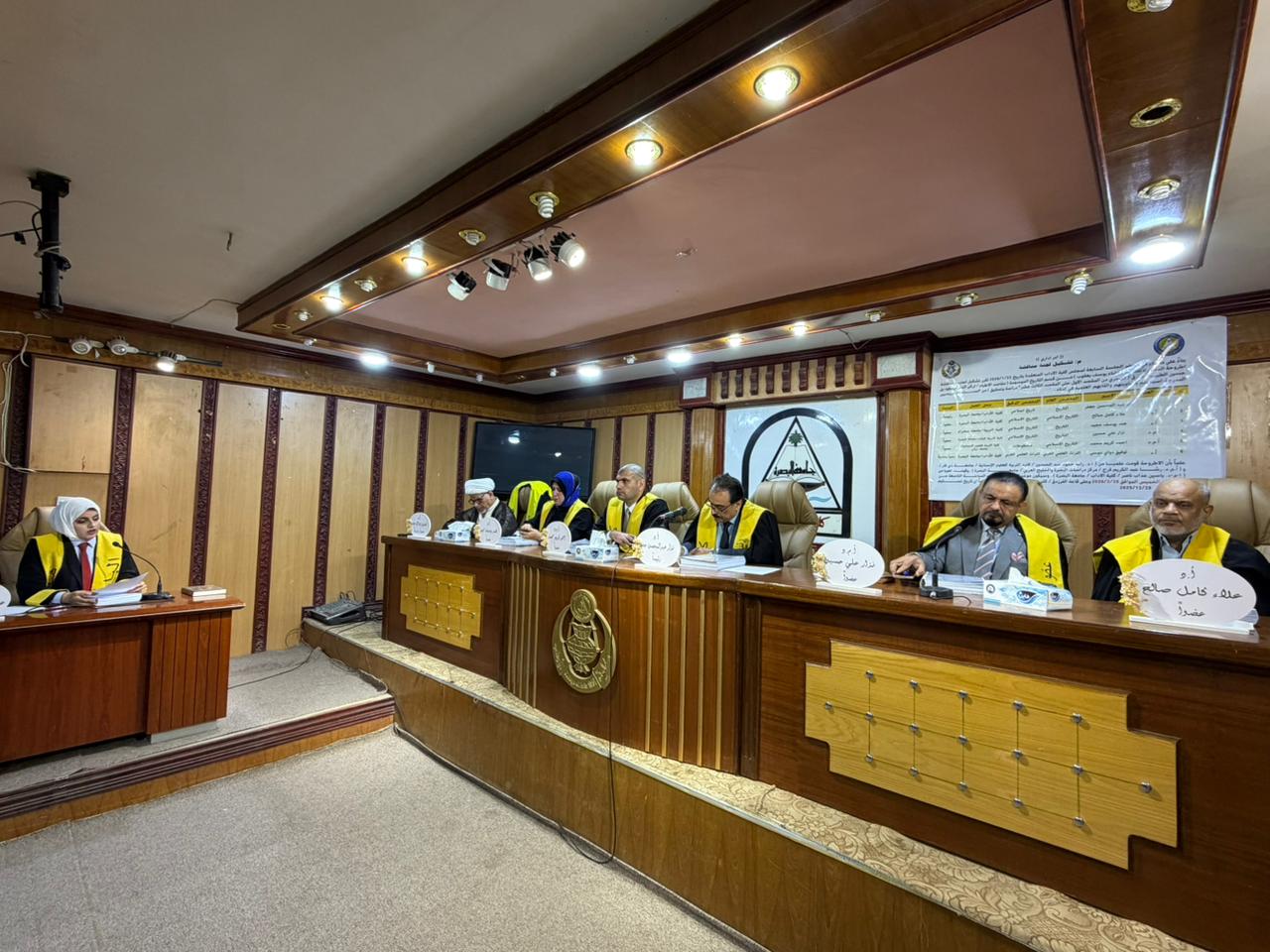
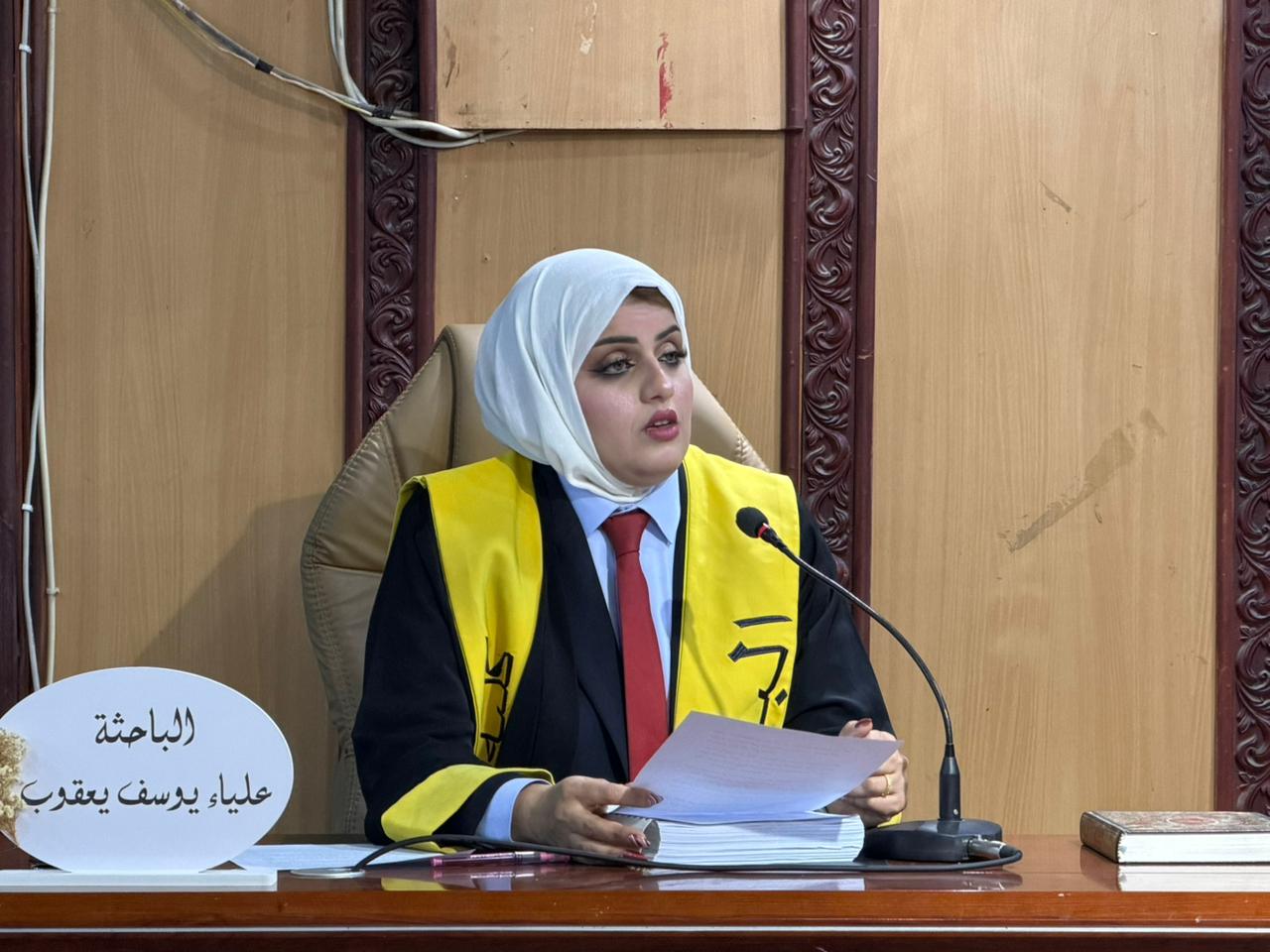
A PhD thesis, titled: (Maqāṣid al-Aṭibbāʾ by Rukn al-Dīn Masʿūd ibn Ḥusayn al-Ṭabīb (7th century AH): From the First Maqṣad to the Thirteenth, Study and Critical Edition), was conducted in the Department of History, College of Arts, University of Basrah
The thesis, submitted by the student Alia Yusuf Yaqoub, aims to contribute to reviving a valuable medical manuscript and to fill a research gap in the study of Islamic medical heritage, while highlighting the civilizational role of Muslim physicians in the development of medical thought.
The thesis consists of two main chapters that work together to provide an in-depth study of the manuscript Maqāṣid al-Aṭibbāʾ. The first chapter addresses the author’s life, his scholarly methodology, and a description of the manuscript. The second chapter is devoted to the critical edition of the manuscript, where the available copies were collected and collated, and a base manuscript was selected to adjust the text and correct instances of scribal error or distortion. This chapter also includes explanations of medical terminology and analysis of their meanings and scientific implications, with a focus on therapeutic methods, whether pharmacological, regimen-based, or dietary.
The study demonstrates that the manuscript Maqāṣid al-Aṭibbāʾ is not merely a conventional medical compendium; rather, it represents a scholarly work with a clear methodological structure. The author organized the medical material into thirty-one maqāṣid, each devoted to the treatment of a specific disease, following a logical sequence that begins with defining the disease, then explaining its causes, symptoms, and progression, and finally outlining methods of treatment. This organization reveals a deep awareness of the nature of instructional medical writing and reflects the author’s effort to produce a scientific text usable by physicians and medical students, especially within the educational and medical environments of his time.
In light of the above, the manuscript Maqāṣid al-Aṭibbāʾ can be considered an important scholarly addition to the corpus of Arab-Islamic medical heritage. It reveals an advanced level of medical and methodological awareness in the era of Rukn al-Dīn Masʿūd. The thesis also confirms that the critical editing and rigorous study of medical manuscripts is an urgent necessity for reconstructing the history of Islamic medicine, understanding its educational and therapeutic mechanisms, and highlighting its contributions to the development of human medical knowledge.
Important News